Some children walk into school carrying books.
Others walk in carrying battles nobody can see.
One child worries about homework. Another worries about whether there will be supper at home. One child slept peacefully. Another listened to arguments, sirens, or silence that felt too heavy for a young heart. Yet society often looks at both children and expects the same behavior, the same confidence, and the same emotional strength.
When children from difficult backgrounds struggle, many people rush to judge them. They are called stubborn, lazy, rude, distracted, or troublesome. Few people stop to ask a more important question:
“What happened to this child?”
Behind many difficult behaviors is a child trying to survive life the only way they know how.
A child who never listens may have grown up in a home where nobody listened to them. A child who fights constantly may have learned that aggression is the only way to stay safe. A child who avoids people may have experienced rejection too many times. These children are not born hopeless. They are shaped by environments they never chose.
That is why they need mentors, not judgment.
Judgment closes doors. Mentorship opens them.
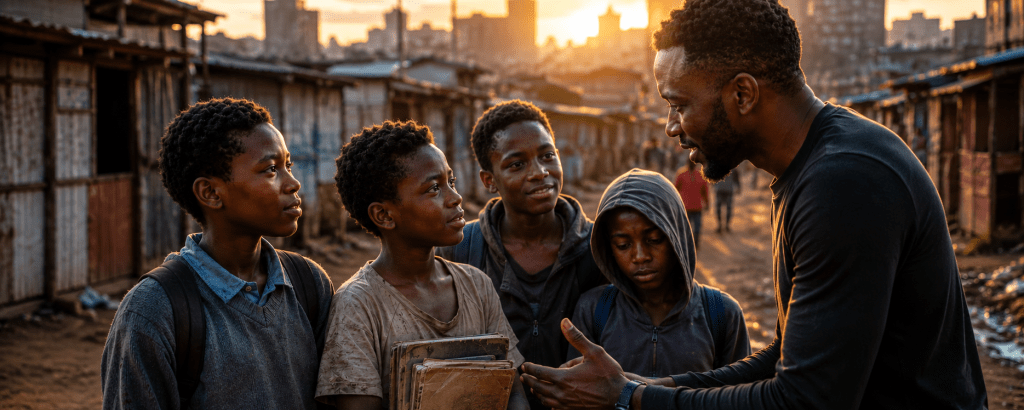
A mentor sees beyond poor grades, torn uniforms, or angry attitudes. They see potential hidden beneath pain. They notice the silent child at the back of the classroom. They encourage the teenager everyone else has already given up on. They remind children that their current situation does not define their future.
Many successful adults today were once children who almost disappeared into hopelessness. The difference was not luck alone. Someone believed in them.
Sometimes one caring adult can completely change the direction of a child’s life.
Not through money.
Not through punishment.
But through consistency.
A mentor says, “I see you.”
A mentor says, “You matter.”
A mentor says, “You can still become something great.”
Those words may sound simple, but to a child who has never heard encouragement, they can feel life-changing.
Children from difficult backgrounds often grow up expecting rejection. They prepare themselves for criticism before people even speak. When society constantly labels them as failures, they begin to believe it. Over time, they stop trying, not because they are incapable, but because hope becomes exhausting.
Mentorship restores that hope.
It teaches children that mistakes are lessons, not life sentences. It helps them discover talents they never knew they had. A mentor can introduce a child to reading, sports, music, leadership, technology, or simply a healthier way of thinking. These small moments create confidence. Confidence creates direction. Direction creates purpose.
The truth is, every child becomes something based on what the world repeatedly tells them.
Tell a child they are useless long enough, and they may eventually act like it. Tell a child they are capable, valuable, and intelligent, and they slowly begin to rise into that identity.
Society must stop expecting wounded children to heal through criticism.
A flower cannot grow properly in a storm without support. In the same way, children facing poverty, neglect, violence, abandonment, or trauma need guidance and patience. They need people willing to stand beside them while they learn, fail, grow, and try again.
Not every child needs a superhero.
Sometimes they only need one mentor who refuses to give up on them.
Because behind every “difficult child” may be a future leader, teacher, artist, entrepreneur, or world changer waiting for someone to believe in them before they believe in themselves.